Author: knutson4

5 things to know about food delivery app EatStreet as its rapid national growth continues

Milwaukee Journal Sentinel

The Madison-based food ordering and delivery app EatStreet is one of the recent success stories in the Wisconsin startup scene. The company founded in a dorm room at the University of Wisconsin-Madison in 2010 has become a real player in the online food ordering business across the United States. EatStreet connects diners in more than 250 cities to more than 15,000 restaurants.

Here Is FEMA’s Plan If the Falling Chinese Satellite Takes Aim at a US City

Gizmodo

Quoted: So would a warning even be worth it? “I imagine perhaps if there was a public information plan, it would generate more hysteria than would be warranted for something so unlikely,” Ruth Rand, historian of science, technology, and the environment during the Cold War at the University of Wisconsin told me. “I imagine some people might respond with undue fear and you might have a crisis in your hands.” Instead, it might be better to just give people what information is available, and remind them not to touch any debris with their hands, as it might contain a corrosive fuel called hydrazine.

Wisconsin Companies Weigh Benefits Of Wellness Programs As Obesity-Related Health Problems Rise

Wisconsin Public Radio

Quoted: “There’s been a push recently for companies, in particular, to start offering direct cash payments or reductions on premiums for insurance for people who engage in healthier activities, so exercising more, dieting, taking a health risk assessment,” said Justin Sydnor, an associate professor at the University of Wisconsin-Madison School of Business, who researches wellness programs.

The University of Wisconsin’s Thompson Center gives conservatism a voice on campus

Milwaukee Journal Sentinel

In an era where truly unbelievable poll results are released every week, one result stands as one of the most surprising. In a Pew Research poll released in July of last year, 58% of Republicans said they believed American universities actually have a negative impact on the U.S.  As recently as 2010, only 32% of Republicans thought colleges did more harm than good — but that number has spiked sharply since 2015.

The romance between Foxconn and Wisconsin almost had a rocky star

Milwaukee Journal Sentinel

Quoted: Maybe, said Hart Posen, a professor at the University of Wisconsin-Madison School of Business, who studies corporate strategy and decision-making under uncertainty. “Gou (a multi-billionaire who runs one of the world’s biggest companies) is clearly a more powerful figure in the global sense than is Gov. Scott Walker, and he should rightly feel like the bigger player on the world stage,” Posen said.

Russian Twitter trolls stoked racial tension in wake of Sherman Park rioting in Milwaukee before 2016 Trump election

Milwaukee Journal Sentinel

Noted: A team that included University of Wisconsin-Madison professor Chris Wells found last month that at least 116 articles from U.S. media outlets included tweets from @TEN_GOP and other Russian-linked accounts, with the tweets usually cited as examples of supposedly ordinary Americans voicing their views. Wells said the tweets found by the Journal Sentinel seemed similar. “It looks very consistent with what we’ve seen in our research so far,” Wells said.

Let Them March: Schools Should Not Censor Students

Education Week

Noted: Kathleen Bartzen Culver is the James E. Burgess Chair in journalism ethics at the University of Wisconsin-Madison and director of the university’s Center for Journalism Ethics. Erica Salkin is an associate professor of communication studies at Whitworth University in Spokane, Wash., and the author of the 2016 book Students’ Right to Speak: The First Amendment in Public Schools (McFarland).

How to make your cover letter shine

Wisconsin State Journal

Cover letters are powerful tools in your quest for a new job. A good one can get you an interview and make you a top candidate. Even if the position you’re seeking doesn’t require much writing, it’s important to demonstrate your communication skills and tailor your message to both the employer and the job. Here are some tips for crafting a compelling message.

The ‘moral hazard’ of naloxone in the opioid crisis

Washington Post

Noted: As opioid usage has worsened in the United States, more and more jurisdictions have acted to increase access to naloxone. Not only first responders but also friends, family and even librarianshave started to administer it. These state laws were passed at different times, giving researchers Jennifer Doleac and Anita Mukherjee a sort of a natural experiment: They could look at what happened to overdoses in areas that liberalized naloxone access and compare the trends there to places that hadn’t changed their laws.

Latest US weather satellite highlights forecasting challenges

Nature

Quoted: The science has been slow to evolve on this because there was less demand for a constant stream of data when forecast models were run only every six hours, says Jason Otkin, an atmospheric scientist at the University of Wisconsin’s Cooperative Institute for Meteorological Satellite Studies in Madison. Now, agencies are shifting towards more-frequent forecasts, using models that can take advantage of larger amounts of high-resolution data. “If anything, the value of these geostationary sensors is only increasing with time,” Otkin says.

Wisconsin doubles GPS monitoring despite five years of malfunctions, unnecessary jailings

Milwaukee Journal Sentinel

Quoted: Cecelia Klingele, a University of Wisconsin-Madison associate law professor who specializes in correctional policy, said DOC is in a difficult position when it knows some, or even many, of the alerts it receives are caused by equipment malfunctions. “Even short periods of jail are highly disruptive and can cause a person to lose his job, be unable to care for children or even lose stable housing,” Klingele said.

Stu Levitan: Don’t blame Vietnam war protesters for campus killings

Wisconsin State Journal

In his column on Sunday, “Killers on campus,” Michael Arntfield tries to tie a series of unsolved murders of young women at UW-Madison to the student protests against the war in Vietnam. His thesis — that three serial killers were able to operate because “the white noise of activism and political agitation … obfuscate(d) their presence” is reprehensible and ludicrous.

Asia’s hunger for sand takes a toll on endangered species

Science

Noted: In grasslands near Poyang, the kind and amount of food the cranes consume “may no longer be enough to fuel egg laying” at the levels the birds managed in the past, says James Burnham, a conservation biologist at the University of Wisconsin in Madison. His group has documented a worrisome decline in the ratio of juvenile cranes to adults at Poyang between 2010 and 2012.

How College Campuses Are Trying to Tap Students’ Voting Power

New York Times

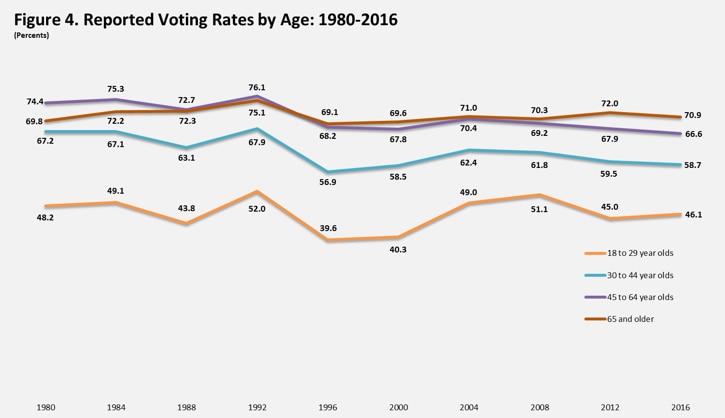
Quoted: Young people have the lowest turnout rates of all because they are more transient and have not yet established the habit of voting, said Kenneth R. Mayer, a political-science professor at the University of Wisconsin-Madison. “They don’t have concerns of property taxes, schools and other things that make older people go to the polls,” he said. The likelihood of voting increases steadily with age, until about 80, when illnesses begin to prevent habitual voters from casting a ballot, he said.

Prescription for secrecy: Is your doctor banned from practicing in other states?

Milwaukee Journal Sentinel

Noted: Plastic surgeon John Siebert had sex with a patient in New York, got his license suspended for three years and was permanently ordered to have a chaperone in the room with any female patients. But he operates free of medical board restrictions in Wisconsin. In fact, he was appointed to an endowed chair at the University of Wisconsin-Madison, funded in part by billionaire Diane Hendricks, a patient and a major political contributor to Gov. Scott Walker.

‘Accountability and Opportunity in Higher Education’

Inside Higher Education

Noted: Also contributing essays to the volume are the two editors of the book, Gary Orfield, Distinguished Research Professor of Education, Law, Political Science and Urban Planning, and co-founder and co-director of the Civil Rights Project, at UCLA; and Nicholas Hillman, an associate professor of educational leadership and policy analysis at the University of Wisconsin at Madison. Orfield and Hillman responded via email to questions about their new book.

Palmer’s Steakhouse owners working to create $1 million endowment for transplant research

Milwaukee Journal Sentinel

Noted: Their new goal will be no small feat. They are working to create the endowment at UW Health for transplant research, with the help of a $500,000 donation. UW-Madison donors John and Tashia Morgridge will give $500,000 to create an endowment in Tony’s name, but to get the money the Arenas family must match that donation in five years.