Cliff Robb quoted.
Vantage Score vs. FICO Score: What’s the Difference?
WalletHub
Cliff Robb quoted.
The Cap Times spoke to University of Wisconsin-Madison professor David Canon, who studies Wisconsin politics and campaigns, about the election and what might be ahead.
Noted: “I think everybody has a knee-jerk reaction on this, and they may prove to be correct, but it is tough to say on these issues,” said UW-Madison Law School professor Ryan Owens, who heads the UW-Madison Tommy G. Thompson Center on Public Leadership.
Quoted: So would a warning even be worth it? “I imagine perhaps if there was a public information plan, it would generate more hysteria than would be warranted for something so unlikely,” Ruth Rand, historian of science, technology, and the environment during the Cold War at the University of Wisconsin told me. “I imagine some people might respond with undue fear and you might have a crisis in your hands.” Instead, it might be better to just give people what information is available, and remind them not to touch any debris with their hands, as it might contain a corrosive fuel called hydrazine.
Quoted: “There’s been a push recently for companies, in particular, to start offering direct cash payments or reductions on premiums for insurance for people who engage in healthier activities, so exercising more, dieting, taking a health risk assessment,” said Justin Sydnor, an associate professor at the University of Wisconsin-Madison School of Business, who researches wellness programs.
Noted: Yaron Nili is an assistant professor of law at the University of Wisconsin Law School.
Quoted: Tracey Holloway, an air emissions expert and professor of atmospheric and ocean science at the University of Wisconsin-Madison, said federal laws dating back to the 1970s have led to cleaner air, but the regulations have also been marked by a tug of war between competing interests.
Cryptocurrency courses are coming to the Wisconsin School of Business as schools worldwide catch on to a new intersection of technology and finance.
Noted: UW-Madison economist Tim Smeeding said there are some qualifications to the report. He noted Milwaukee is still in a slump and Walker’s efforts to encourage those receiving public benefits to work will require child care and transportation workers that are also hard to find in a labor shortage.
Noted: Laura Albert, a University of Wisconsin-Madison professor and expert on lottery odds, agreed. Albert said some people play the lottery professionally, such as monitoring games’ payouts, and then buying tickets in bulk when the game’s payouts are far below normal.
Quoted: Maybe, said Hart Posen, a professor at the University of Wisconsin-Madison School of Business, who studies corporate strategy and decision-making under uncertainty. “Gou (a multi-billionaire who runs one of the world’s biggest companies) is clearly a more powerful figure in the global sense than is Gov. Scott Walker, and he should rightly feel like the bigger player on the world stage,” Posen said.
Noted: A team that included University of Wisconsin-Madison professor Chris Wells found last month that at least 116 articles from U.S. media outlets included tweets from @TEN_GOP and other Russian-linked accounts, with the tweets usually cited as examples of supposedly ordinary Americans voicing their views. Wells said the tweets found by the Journal Sentinel seemed similar. “It looks very consistent with what we’ve seen in our research so far,” Wells said.
Noted: Laura Albert, a UW-Madison professor and expert on lottery odds, agreed. Albert said some people play the lottery professionally, such as monitoring games’ payouts, and then buying tickets in bulk when the game’s payouts are far below normal.
Noted: Hart Posen, associate professor at the UW-Madison School of Business, said the announcement is not unexpected.“They’ve been in trouble for so many years. It’s rather surprising they’ve lasted this long,” Posen said.
Noted: Kathleen Bartzen Culver is the James E. Burgess Chair in journalism ethics at the University of Wisconsin-Madison and director of the university’s Center for Journalism Ethics. Erica Salkin is an associate professor of communication studies at Whitworth University in Spokane, Wash., and the author of the 2016 book Students’ Right to Speak: The First Amendment in Public Schools (McFarland).
Noted: Steve Ackerman and Jonathan Martin, professors in the UW-Madison department of atmospheric and oceanic sciences, are guests on WHA radio (970 AM) at 11:45 a.m. the last Monday of each month.
Noted: Resarch from Anita Mukherjee of the Wisconsin School of Business.
Noted: As opioid usage has worsened in the United States, more and more jurisdictions have acted to increase access to naloxone. Not only first responders but also friends, family and even librarianshave started to administer it. These state laws were passed at different times, giving researchers Jennifer Doleac and Anita Mukherjee a sort of a natural experiment: They could look at what happened to overdoses in areas that liberalized naloxone access and compare the trends there to places that hadn’t changed their laws.
Quoted: The science has been slow to evolve on this because there was less demand for a constant stream of data when forecast models were run only every six hours, says Jason Otkin, an atmospheric scientist at the University of Wisconsin’s Cooperative Institute for Meteorological Satellite Studies in Madison. Now, agencies are shifting towards more-frequent forecasts, using models that can take advantage of larger amounts of high-resolution data. “If anything, the value of these geostationary sensors is only increasing with time,” Otkin says.
Quoted: Cecelia Klingele, a University of Wisconsin-Madison associate law professor who specializes in correctional policy, said DOC is in a difficult position when it knows some, or even many, of the alerts it receives are caused by equipment malfunctions. “Even short periods of jail are highly disruptive and can cause a person to lose his job, be unable to care for children or even lose stable housing,” Klingele said.
Noted: Kimberlee Burrington of the Center for Dairy Research at UW-Madison judged the yogurt category with Jean Luc Boutonnier, a food science specialist from the south of France. They found few duds among the entries.
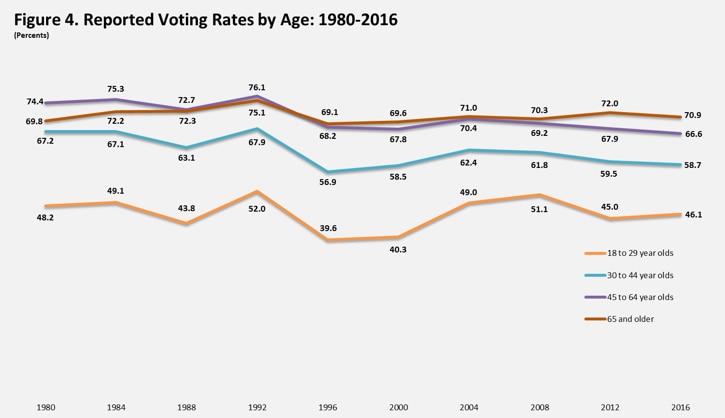
Quoted: Young people have the lowest turnout rates of all because they are more transient and have not yet established the habit of voting, said Kenneth R. Mayer, a political-science professor at the University of Wisconsin-Madison. “They don’t have concerns of property taxes, schools and other things that make older people go to the polls,” he said. The likelihood of voting increases steadily with age, until about 80, when illnesses begin to prevent habitual voters from casting a ballot, he said.
Noted: UW-Madison economist Steven Deller said Trump’s plan could dampen the U.S. construction market and increase consumer costs, especially for cars and home appliances.
Noted: Also contributing essays to the volume are the two editors of the book, Gary Orfield, Distinguished Research Professor of Education, Law, Political Science and Urban Planning, and co-founder and co-director of the Civil Rights Project, at UCLA; and Nicholas Hillman, an associate professor of educational leadership and policy analysis at the University of Wisconsin at Madison. Orfield and Hillman responded via email to questions about their new book.
Quoted: “This could absolutely give Amazon pause,” said Neeraj Arora, a marketing professor at the Wisconsin School of Business. “The company has taken a stance on social issues in the past.”
Noted: Anthony J. Nyberg, a professor at the University of South Carolina’s Darla Moore School of Business, and Charlie O. Trevor, a professor at the University of Wisconsin-Madison School of Business, write about the results of research in the Harvard Business Review. The recommend that company leaders focus on “communication.”
Quoted: “These (changes) not only will prevent consumers from standing up for their rights but also allow unscrupulous rent-to-own businesses to open and thrive in Wisconsin,” said Sarah Orr, director of the Consumer Law Litigation Clinic at the University of Wisconsin Law School.
Caregivers of cancer patients are just as likely to be depressed as the cancer patients themselves, but a new study finds that they’re less likely to seek treatment. We talk with a researcher about the study and what we can do to take better care of caregivers. Interview with Kristin Litzelman from the School of Human Ecology.
Jim Lattis, director of UW Space Place, University of Wisconsin-Madison astronomy department: We really don’t know if space goes on forever. The universe is big enough that we can’t see all of it for a number of reasons. And there are ways that we could live in a space that doesn’t go on forever, but still has no actual edge to it.
Black History Month started as a weeklong commemoration in 1926 called Negro History Week and was the brainchild of Carter G. Woodson, an African-American historian, UW-Madison professor Brenda Plummer said.
Noted: Barry Gerhart, acting dean and senior associate dean for faculty and research at the Wisconsin School of Business at the University of Wisconsin at Madison, to interim dean of the school.
Quoted: There’ll be plenty of flowers and candy given out today, but to make love grow, you need to have a talk with your honey about money. That’s the advice of Christine Whelan, a clinical professor who directs the Money, Relationships and Equality initiative at the University of Wisconsin-Madison. One of her sayings is, “Roses are red, violets are blue; talk about money and grow your love, too.”
Noted: Just to make sure, I checked in by email with Scott Bachmeier, a research meteorologist with the University of Wisconsin’s Cooperative Institute for Meteorological Satellite Studies. “Those are indeed ship tracks — a few cases are documented on our blog,” he wrote back. For more imagery, make sure to click on that link to the excellent CIMSS satellite blog.
It’s almost Valentine’s Day, and if you’re looking for love, chances are you may be thinking about looking online. News 3 sits down with Catalina Toma, an associate professor at UW-Madison, who has been researching online dating and the role of technology.
Quoted: Kenneth Streit, a UW-Madison Law School professor who specializes in criminal justice issues and has studied juvenile corrections in Wisconsin for decades, said the Assembly has proposed “a great plan.”
Quoted: Kenneth W. Potter, a storm water expert and professor emeritus of environmental engineering at the University of Wisconsin-Madison, said that the rollback comes as the Upper Midwest is experiencing more precipitation.
Quoted: “Unfortunately, she couldn’t be more incorrect,” said James H. Conway, a pediatrics professor at University of Wisconsin-School of Medicine and Public Health. “The science is clear and has been reviewed over and over not just by the CDC, but by NIH and numerous studies. The information is clear that the measles, mumps and rubella vaccine does not cause autism.”
Also quoted: Maureen S. Durkin, a professor of public health and chairman of the department of population health sciences at the UW School of Medicine and Public Health, said, “The scientific evidence is very clear at this point in showing no association between childhood vaccines and the risk of autism.”
Noted: Because these lawsuits are private litigation, they will likely not result in structural reform to the poultry sector, says Peter Carstensen, a law professor at the University of Wisconsin-Madison who researches competition and regulation in the meat sector. He says the lawsuits probably won’t have “much effect” on the “very serious problem” of how processors “exploit the farmers who raise their chickens.”
Mitch, an associate professor at UW-Madison and director of the Neighborhood Law Clinic who goes by just that name, compared (Matthew Desmond’s book, “Evicted”) to “The Jungle,” the Upton Sinclair novel that portrayed harsh working conditions faced by immigrants in the early 1900s.
Noted: Renk Professor of Agribusiness Department of Agricultural and Applied Economics at the University of Wisconsin-Madison Brian Gould said something that “put a strain on the world’s dairy market” was when the European Union lifted its milk quotas in 2015.
Quoted: “(Starting a business) is something brand new, and it’s hard, and you are always going to learn from your customer,” said Dan Olszewski, director of the Weinert Center for Entrepreneurship at the University of Wisconsin.
Noted: “In the 1860s, like today, no one would have argued that the dead should not be appropriately buried,” said Stephen Kantrowitz, Vilas Distinguished Achievement Professor of history at UW-Madison. “But I think it’s fair to say that no one would have imagined that the soldiers of an army of rebellion against the United States deserved a monument to their heroic sacrifice.”
Noted: “In a general election, Madison and Milwaukee have a lot of influence,” said UW-Madison political science professor Barry Burden. “In a Democratic primary it’s exacerbated because Democrats are so heavily concentrated. The candidates have to spend time in those places. Madison plays an out-sized influence in the primary stage.”
Quoted: “The children of incarcerated parents have been invisible for a long time because of stigma,” says Julie Poehlmann-Tynan, UW-Madison professor of human development and family studies. Poehlmann-Tynan has researched this population since 1996. She’s done the first ever observational study of children visiting incarcerated parents. Her work focuses on what will help children cope and thrive while a parent is incarcerated.
Noted: Thomas O’Guinn, marketing professor and Thomas J. Falk distinguished chair in business at the University of Wisconsin at Madison, thinks the study is on point. Having studied sons who got into longstanding grudges over not picking the same brand of car as dad or not liking the same “family” brand of beer, he attests that the results are not surprising at all.
Unemployment rates in the badger state may be some of the lowest on record, but the types of jobs being created are generally on the low or high end of the wage scale, resulting in an absence of mid-level jobs, according to according to Dr. Steven Deller, economist with UW-Madison.
Noted: Patricia McConnell, an adjunct professor of zoology at UW-Madison and a certified applied animal behaviorist, echoed the fears … that more tragedies will occur if the DNR doesn’t make more of an effort to educate everyone about the rules. McConnell, a widely known author and speaker on animal behavior, said more than 90 dogs were caught in traps in Wisconsin in 2016.
At the forum, Pam Oliver, a professor of sociology at the University of Wisconsin-Madison, said there’s little or no evidence that checking in with parole officers lowers the risk of a future criminal offense. She called supervision rules “almost impossible not to violate,” especially considering many ex-prisoners struggle with addiction, mental illness and poverty.
It’s likely both political parties in Wisconsin will tap into rural resentment as the state heads into a gubernatorial and U.S. Senate election later this year, said University of Wisconsin-Madison researcher and author Kathy Cramer on Tuesday.
Noted: UW-Madison political science professor Barry Burden said Walker’s fundraising total is somewhat lower than he expected given individual contribution limits have doubled to $20,000 since the 2014 election, Walker’s national profile was elevated during his short-lived presidential run and he became chairman of the Republican Governors Association.
Noted: Ryan Owens, a UW-Madison Law School professor who specializes in judicial issues and is a member of the conservative-leaning Federalist Society, said the U.S. Supreme Court in 2002 decided it was permissible for judicial candidates to make their positions known.
Noted: Cliff Robb, an associate professor of consumer science at the University of Wisconsin-Madison, studies how people make financial decisions and facilitates efforts on campus to talk to students about how they handle money.
Noted: “He was coming to Madison because there was an enthusiastic — more than enthusiastic — response from white listeners to what Otis was offering,” said cultural historian, author and UW-Madison professor of Afro-American studies Craig Werner, whose living room overlooks the lake where Redding died. “And that was just opening up at this period of his life.”
Quoted: UW-Madison professor of economics Noah Williams said this has been happening for years. “Since the recession, since 2008, it’s been net out-migration, so more people moving out than moving in,” said Williams.
Noted: State judicial races are officially nonpartisan. Still, the primary is likely to center on Burns and Dallet courting Democratic and liberal voters, said Ryan Owens, a UW-Madison political science and law professor who studies the courts.
Quoted: The long-term gains will come from what businesses spend on equipment and technology, said Noah Williams, an economics professor at the University of Wisconsin-Madison.
Quoted: “And that’s been true for many years,” said Brad Chandler, director of the Nicholas Center for Corporate Finance and Investment Banking at UW-Madison.
Noted: Enacted in 2002 in response to jolting financial scandals at Enron, WorldCom and other major companies, SOX instituted a considerable tightening of federal corporate regulation. In the words of the study, by James A. Chyz of the University of Tennessee and Fabio B. Gaertner of the University of Wisconsin–Madison, the “post-SOX period coincided with increased IRS scrutiny of aggressive tax positions and legislation that led to increased regulatory scrutiny over the tax function. Consistent with increased pressures to be less tax-aggressive, we find that being in the lowest quintile of benchmarked tax rates [became] influential in predicting CEO turnover… This is consistent with boards responding to…increase[d] political and reputational costs surrounding tax avoidance.”
University of Wisconsin-Madison political science professor Ken Mayer released results of a study this fall that found changes to the state’s voter ID law led to enormous confusion and deterred thousands from voting.
Noted: Commission member Julie Underwood, a school law professor at UW-Madison and the former dean of the university’s School of Education, said she wants the commission’s work to build not from a total blank slate, but from the state Constitution’s requirement of providing a “uniform system of education.”
Noted: Timothy Smeeding, a UW-Madison professor at the La Follette School of Public Affairs and the former director of Institute for Research and Poverty, believes that it’s possible to cut child poverty in half (personally, he’s a proponent of income support for parents with kids), but believes reaching the goal will require federal effort.