In an unassuming building off of West Johnson Street, sits the remains of around 750,000 animal specimens for scientific research in the UW Zoological Museum. One of five museum collections on the UW Madison campus, the collection provides hands-on research material for universities across the country.
Category: UW Experts in the News
Climate change is making conditions harder for Wisconsin trout. But there is hope.
Noted: In a study published in the journal Ecosphere in December, Alex Latzka, a fisheries biologist with the Wisconsin Department of Natural Resources, and Bryan Maitland, a postdoctoral fellow at the University of Wisconsin-Madison’s Aquatic Sciences Center, compared annual brook and brown trout population numbers over nearly three decades with climate and weather data from the streams the trout swam in.
Opinion | The Resentment Fueling the Republican Party Is Not Coming From the Suburbs
In her groundbreaking study of Wisconsin voters, “The Politics of Resentment: Rural Consciousness in Wisconsin and the Rise of Scott Walker,” Katherine Cramer, a political scientist at the University of Wisconsin-Madison, prompted a surge of interest in this declining segment of the electorate. She summed up the basis for the discontent among these voters in a single sentence: “First, a belief that rural areas are ignored by decision makers, including policymakers, second, a perception that rural areas do not get their fair share of resources, and third a sense that rural folks have fundamentally distinct values and lifestyles, which are misunderstood and disrespected by city folks.”
100-year floods: The metric behind America’s infrastructure is out of date, and thanks to climate change we’re paying the price.
“It’s kind of a mess, even in the absence of climate change,” said Daniel Wright, an associate professor at the University of Wisconsin. Wright helped Madison adopt climate-conscious design guidelines and works with the magically named U.S. Office of Water Prediction. “Almost all of [the models] assume that data varies from year to year, but underlying drivers are not changing over time. Those assumptions just don’t hold.”
Carbon emissions in Madison suburbs exceed national average
And while density and access to public transit are major factors, so is wealth, according to Morgan Edwards, an assistant professor of public affairs at the University of Wisconsin. Her research focuses on the role of technology in addressing the threat of climate change. “It’s not surprising that, all else equal, emissions are higher in more affluent and less densely populated areas, but these averages can also mask a lot of variability,” Edwards said. “Two households in the same neighborhood could have very different emissions.”
Weird winter weather: Thundersnow, frost quakes and more
“Very intense winter storms can trigger the rare phenomenon of thundersnow,” says Michael Notaro, an atmospheric scientist and director of the Nelson Institute Center for Climatic Research at the University of Wisconsin in Madison. “Thundersnow events usually bring infrequent lightning flashes and quieter thunder as the heavy snowfall muffles the sound.”
Scientists study crowdsourced trail camera photos of Wisconsin wildlife
Snapshot Wisconsin has collected more than 2 million images caught on motion-sensor trail cameras. Researchers have looked at many of the photos and found further evidence of animals changing their behavior due to the presence of humans and loss of habitat.
Interview with associate professor Benjamin Zuckerberg, and Jonathan Pauli, a professor of wildlife ecology, both in the University of Wisconsin-Madison Department of Forest and Wildlife Ecology.
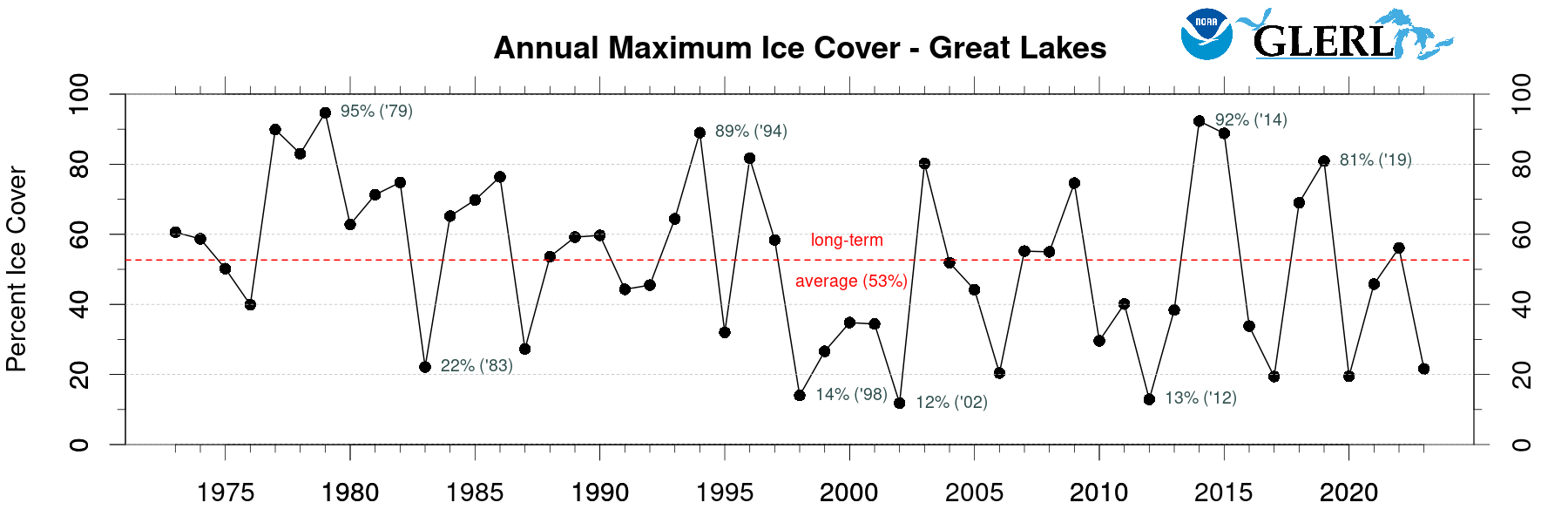
It’s mid-January and the Great Lakes are virtually ice-free. That’s a problem.
Noted: Of the last 25 years, 64% had below-average ice, said Michael Notaro, the director of the Center on Climatic Research at the University of Wisconsin-Madison. The steepest declines have been in the north, including Lake Superior, northern Lake Michigan and Huron, and in nearshore areas.
Russian Soldiers Who Fled Front Lines Call Out Putin for Lying About War
Mikhail Troitskiy, professor of practice at the University of Wisconsin-Madison, told Newsweek that it’s unlikely the mobilized soldiers in question expected to remain in “territorial defense.”
China’s population is shrinking. The impact will be felt around the world
“India is the biggest winner,” tweeted Yi Fuxian, who studies Chinese demographics at the University of Wisconsin-Madison.
Some Wisconsin shoppers are paying $8 for a dozen eggs. Here’s why prices have soared.
Noted: Chicken flocks are still down 5% to 6%, said Lou Arrington, an emeritus professor of poultry sciences at University of Wisconsin-Extension who works with the Wisconsin Poultry & Egg Association. That may not seem a lot, but it has an outsized impact because demand for eggs is “inelastic” — it doesn’t vary much as prices rise or fall, he said. Bakeries and other food producers’ need for eggs hasn’t changed, and consumers have sucked it up and continue to pay prices that may make them gasp, Arrington said.
“I don’t think the individual producer has a lot to say about it,” he said of the nationwide forces that have driven up prices.
8 Subtle Ways Parents Create Anxiety Without Realizing It
Alvin Thomas, an assistant professor of human development and family studies at the University of Wisconsin–Madison, also emphasized the importance of talking about your emotions as a parent. This approach prevents your children from making up anxiety-based stories to explain why the adults around them are behaving differently.
“It is OK, for instance, to say to your child that dad is feeling a little sad or a little frustrated,” he explained. “It expands the child’s emotional vocabulary, teaches them to talk through their emotions, and models for them how to do this. Then you could go on to give age-appropriate reasoning. Dad is feeling frustrated because dad was really hoping for something, but it did not happen.”
Single-use coffee pods aren’t as wasteful as you may think
“Sometimes it’s really counterintuitive,” said Andrea Hicks, an environmental engineering expert at the University of Wisconsin at Madison. She conducted a similar analysis comparing different brewing methods, and also found pods had less environmental impact than the conventional drip filter method, and in some cases were better than using a French press.
“Often people assume that something reusable is always better, and sometimes it is,” Hicks said. “But often people really don’t think about the human behavior.”
In defense of “haters” like TikTok’s Talia Lichtstein
These kinds of “pro-negativity” behaviors, whether ironic or not, have been studied by scholars for decades, notably by University of Wisconsin communications professor Jonathan Gray, who in 2003 argued for the inclusion of “anti-fans” within audience studies, or people who actively dislike specific texts. Anti-fans, many scholars have suggested, subvert the traditional mode of media consumption, wherein we’re supposed to accept and like the thing we’re watching. “As active, engaged viewers, we are not supposed to dislike, and we are meant to treat dislike with suspicion in others because liking has been characterized as a progressive effort to champion the underdog in popular media,” writes Anne Gilbert in the anthology Anti-Fandom: Dislike and Hate in the Digital Age.
Senate advances changes to Wisconsin’s cash bail system
Allowing a judge to impose bail for reasons beyond ensuring a defendant would appear at their next court hearing would likely result in more poor people being incarcerated, the two legal experts, Jessa Nicholson Goetz, a criminal defense attorney with Nicholson Goetz & Otis in Madison, and University of Wisconsin Law School professor Cecelia Klingele, said.
Air pollution worse and more dangerous to urban dwellers with asthma, new study finds
Quoted: Dr. Daniel Jackson, a professor of pediatrics and medicine in the School of Medicine and Public Health at the University of Wisconsin-Madison, helped conduct the study and he noted “pollution exposures” were the culprits in 30% of the asthmatic children tested.
“Ultimately, we’ve known for a long time that children in urban environments are more likely to have asthma attacks,” he said. “Clearly, the exposures there are quite different. (When) compared to other places in the country, there’s far more pollution associated with diesel and auto traffic.”
Freshwater fish are significantly more contaminated with toxic forever chemicals than saltwater fish and shellfish, analysis shows
“People are getting PFAS from so many different places, from their diet and from water,” said Christy Remucal, an associate professor of civil and environmental engineering at the University of Wisconsin who researches forever chemicals but was not involved in the new study.
Signup deadline near for Wisconsin’s nitrogen optimization pilot program
University of Wisconsin soil scientist Matt Ruark tells Brownfield the state-funded program helps farmers test different nitrogen use practices with less financial risk. “They’re going to cover the cost of time, of land, of yield loss, of soil testing, of you know, anything else that’s going to be connected with the project.”
New crop insurance opportunities for soybeans and oats
Economist Paul Mitchell is with the University of Wisconsin. He tells Brownfield, “The earliest planting dates have become earlier now. They used to be April 26th for the whole state of Wisconsin. It’s now April 15th for the southern third, April 20th in the middle chunk, and then the very far north is actually April 30th.”
China records its first population decline in decades
China’s population has begun to decline nine to 10 years earlier than Chinese officials predicted and the United Nation projected, said Yi Fuxian, a demographer and expert on Chinese population trends at the University of Wisconsin-Madison.
India to overtake China as world’s most populous nation
That, combined with India’s growing population and a shift away from China due to geopolitical reasons, may help the South Asian country chip away at China’s dominance as the world’s factory. “A lot of production capacity will be moved to India,” Yi Fuxian, a scientist in obstetrics and gynecology at the University of Wisconsin-Madison, told Axios.
Money tips for 2023
According to experts: Money tips for 2023 Christine Whelan, Clinical Professor of Human Ecology at the University of Wisconsin-Madison, shares ideas for approaching personal finance and family goals. Interview: AP
What, if Anything, Can You Do to Prepare for a Recession?
The best strategy is to always be preparing for recessions, says Cliff Robb, a professor of consumer science at the University of Wisconsin-Madison who studies financial decision-making. Which means now is as good a time as any to get started.
Question Everything: Do metal detectors at schools really work?
We spoke with Ben Fisher, a professor at the University Of Wisconsin. He has researched security measures in schools.”You can spend some money and put in metal detectors, or put on a big show of having police dogs some in, but those aren’t the things that make schools safe,” believes Fisher.
‘We’ve lost track of who we are’: How one group is helping people support farmer mental health
The group (Farm Well Wisconsin), founded in 2020, is funded through a five-year grant associated with the Wisconsin Partnership Program at the University of Wisconsin-Madison School of Medicine and Public Health. Through trainings, community members work on building empathetic listening skills, connecting people with resources and discussing issues related to farm culture.
Legislation by Sen. Tammy Baldwin requires more transparency around foreign owners of US farmland
Quoted: Andrew Stevens, assistant professor of agricultural and applied economics at the University of Wisconsin–Madison, said this percentage has been fairly consistent over time and includes forestland, pasture and cropland.
“The analyses that have been done with the data that are currently available really show that foreign ownership of agricultural land in the United States is a pretty miniscule issue, if it’s an issue at all,” he said. “There are no systematic differences across communities with more or less foreign ownership. Land prices don’t seem to systematically differ.”
As Historians Gather, No Truce in the History Wars
Noted: Controversy exploded in August, when the association’s president, James H. Sweet, a leading historian of the African diaspora at the University of Wisconsin, published a column in its magazine called “Is History History?,” which lamented a “trend toward presentism” and a troubling politicization of scholarship.
The study of pre-modern history, Sweet wrote, is shrinking, while scholars of all periods increasingly question whether work that doesn’t focus on “contemporary social justice issues” like race, gender and capitalism really matters. “The allure of political relevance, facilitated by social and other media,” he argued, has encouraged “a predictable sameness” that misses the messiness and complexity of the past.
Here are experts’ predictions on what 2023 holds for inflation, employment and housing in Wisconsin
Quoted: Brad Tank, an investment management expert and University of Wisconsin-Madison alumnus, thinks federal officials will be successful in limiting inflation in 2023.
Tank explained in a recent UW Now livestream, “Predictions for 2023,” that he expects inflation to remain above 4% up until the middle of 2023. The rate most likely wouldn’t hit 2% until 2024.
‘They cleared the windscreen’: Prince Harry opens up about psychedelic use as research continues at UW-Madison
Quoted: For roughly a decade, professionals at the University of Wisconsin-Madison have been researching the impacts certain psychedelics, including psilocybin, can have on the human brain.
“There are some really encouraging trends that have been noted and encouraging study results that have been published across the country,” said Dr. Chantelle Thomas, a researcher at UW’s Department of Family Medicine and Community Health. “A lot of people are not aware that this research has been happening for quite some time at the UW.”
Invasive snails become gourmet meal in Wisconsin episode of cooking show
There might be a new way to think of one particular species of invasive snail being found in Wisconsin’s water: as a part of a gourmet meal.
At least that’s the approach Minneapolis chef Yia Vang and Titus Sielheimer, a fisheries outreach specialist for the University of Wisconsin Sea Grant, made this summer, when they filmed themselves harvesting and cooking up Chinese mystery snails in northern Wisconsin.
Former CEO of shuttered Milwaukee abortion clinic opens new site in Rockford
Noted: Christensen said he chose to open a clinic in Rockford because it would provide a closer option for women in the Madison area than Chicago-area abortion clinics. Rockford is about an hour and a half south of Madison.
He said he also envisioned the yet-to-be-opened surgical clinic as a potential training location for OB-GYN residents in the University of Wisconsin-Madison School of Medicine and Public Health. The Dobbs decision created new hurdles for OB/GYN residency programs across Wisconsin, because the Accreditation Council of Graduate Medical Education requires them to teach abortion-related procedures or face losing accreditation.
Career-Readiness Initiatives Are Missing the Mark
Written by Matthew T. Hora, an associate professor of adult and higher education and co-director of the Center for Research on College-Workforce Transitions at the University of Wisconsin-Madison.
Creating a diverse, equitable and inclusive learning and working environment at UW-Madison
We talk with LaVar J Charleston, the University’s Chief Diversity Officer, about his job and efforts to promote equity and social justice. We also look at scholarship and service programs designed to increase diversity and foster equity.
‘New era of treating Alzheimer’s’: Wisconsin doctors, researchers celebrate FDA approval of new drug
Quoted: Dr. Cynthia Carlsson, Professor of Medicine at the University of Wisconsin-Madison, said Leqembi targets deposits of proteins in the brain called amyloid. Amyloid is believed to contribute to the symptoms of Alzheimer’s Disease.
“What was impressive about this study is that it improved the amyloid levels in the brain, lowered those. It improved their cognition, improved their function, improved their quality of life, all of these things we really care about, as well as, what the brain looks like,” Carlsson said.
Carlsson told CBS 58 the drug is primarily given to people with mild Alzheimer’s symptoms intravenously every two weeks.
She said side effects can include increased risk of micro bleeds and swelling in the brain.
“The results from the clarity study showed pretty vigorous responses across all of these outcome measures, which we hadn’t seen for a therapy like this before,” Carlsson said.
CDC tracking rise of new XBB.1.5 COVID variant, now dominant strain among U.S. cases
“With what we know so far, XBB.1.5 has not acquired any new mutations in the viral protein targeted by Paxlovid. The susceptibility of XBB.1.5 against Paxlovid should not change given the current data,” the University of Wisconsin-Madison’s Peter Halfmann, one of that study’s authors, told CBS News in an email.
Moving to Florida Could Save You on Taxes, but Cost More Overall
University of Wisconsin economics professor Steven Deller agreed. “Florida is above the national average, but it’s not even close to the most expensive place to live,” he said.
Eating only raw food is ranked the worst diet
“What’s nice is Mediterranean is relatively user friendly. How it’s structured is similar to the (U.S. Department of Agriculture) healthy eating plan,” Camila Martin, a nutritionist at University of Wisconsin Health in Madison, who wasn’t involved in the rankings, tells TODAY.com. “It’s very modifiable based off what people have access to even with limited resources.”
7 questions older patients should ask their surgeon
What’s the goal of this surgery? Ask your surgeon, “How is this surgery going to make things better for me?” said Margaret “Gretchen” Schwarze, an associate professor of surgery at the University of Wisconsin School of Medicine and Public Health. Will it extend your life by removing a fast-growing tumor? Will your quality of life improve by making it easier to walk? Will it prevent you from becoming disabled, akin to a hip replacement?
Day 3: Small Talk Has Big Benefits
Weak ties often have different knowledge from those in our immediate social circle, said Stav Atir, an assistant professor of management at the Wisconsin School of Business at the University of Wisconsin-Madison. Dr. Atir led a study in 2022 that suggested that people underestimate the potential for learning from these interactions. “In our data, we often see strangers giving each other recommendations such as a new restaurant to check out, a new band to listen to and even a potential place of employment,” she said.
‘It landed in the checking account’: Wisconsin farm economist, lender say 2022 was a good year for ag
Even after a year of record high inflation, economic forecasts show 2022 was a good year to be farming.
The U.S. Department of Agriculture’s Economic Research Service estimated that national net farm income will reach $160.5 billion for the year. That’s 13.8 percent higher than in 2021 and roughly 50 percent higher than the 20-year average, according to ag economist Paul Mitchell.
Mitchell, who leads the Renk Agribusiness Institute at the University of Wisconsin-Madison, said part of the prosperity comes from COVID-19 aid from the federal government, which helped kick-start demand after an initial downturn at the start of the pandemic.
“We’ve had unprecedented levels of commodity support for agriculture for a couple years and then really good prices,” he said.
Q&A: Author and UW prof Beth Nguyen finds a new perspective
Growing up as a Vietnamese refugee in a predominantly white community, Beth Nguyen began grappling with her identity at an early age.
At 8 months old, she and her family fled Vietnam by ship after the fall of Saigon, eventually immigrating to Grand Rapids, Michigan. Nguyen detailed that journey, her coming of age and her longing to fit in as an American in her award-winning debut memoir “Stealing Buddha’s Dinner,” published in 2007.
Now an English and Asian American studies professor at the University of Wisconsin-Madison, Nguyen teaches others how to shape their own thoughts and experiences into meaningful stories. “Find that perspective,” she encourages them. “Meld into it. Use it.”
UW-Madison engineers use carbon nanotubes to better protect against brain injuries
University of Wisconsin-Madison engineers have developed a new shock-absorbing foam made from carbon nanotubes aimed at reducing traumatic brain injuries in U.S. soldiers. The material has been shown to absorb shock 18 times better than existing military helmet liners and could also offer athletes better protection against concussions.
In order to tackle big issues like brain injuries on the battlefront, UW-Madison associate professor of engineering and physics Ramathasan Thevamaran thinks small — as in micrometers. He and fellow engineers at the university have developed a way to make flexible carbon tubes, around a thousand times smaller than a human hair, into a new type of ultra-shock-absorbing foam.
UW-Madison researcher says drone-delivered defibrillators can save lives
When a heart stops, survival rates fall with every passing minute. A University of Wisconsin-Madison researcher thinks minutes and lives can be saved in rural areas with fleets of autonomous drones equipped with defibrillators.
And saving lives is in UW-Madison assistant professor and researcher Justin Boutilier’s blood. When he was growing up in Canada, his mother was a nurse and his father was a paramedic and firefighter.
CDC tracking rise of new XBB.1.5 COVID variant, already more than 40% of U.S. cases
“With what we know so far, XBB.1.5 has not acquired any new mutations in the viral protein targeted by Paxlovid. The susceptibility of XBB.1.5 against Paxlovid should not change given the current data,” the University of Wisconsin-Madison’s Peter Halfmann, one of that study’s authors, told CBS News in an email.
Fact check: Post falsely links WI military votes to election tampering
Such a comparison is inappropriate because of turnout differences in both elections, Barry Burden, a politics professor at the University of Wisconsin-Madison, told USA TODAY in an email.
“Turnout of military and especially non-military voters is far higher in a presidential contest because of the intensity, visibility and national importance of a presidential election,” Burden said. “Military voters in particular tend to be less involved in non-presidential elections because their deployments take them away from the everyday news of state politics.”
Layoffs have ticked up but hiring is still strong
Many companies still need to hold on to workers, said Menzie Chinn, an economics professor at the University of Wisconsin.“I think you’d need a much higher ratio of layoffs to hiring in order to be alarmed.”
Private investors, Rising Rents
These firms “have an incentive to raise rents as quickly as they can so that they can get the next buyer to pay more,” said Michael Brennan, chairman of the Brennan Investment Group, a real estate firm, and director of the James A. Graaskamp Center for Real Estate at the University of Wisconsin at Madison. Other owners, he said, are “not as maniacally focused on getting the last nickel as quickly as they can.”
When To Use Your Rainy Day Fund During A Recession
Households need to start behaving a bit like a company would, says J. Michael Collins, faculty director of the Center for Financial Security at the University of Wisconsin, Madison. As a head of the household “company,” you decide when to spend your earnings and where you need to cut expenses first.
Best Kids TV Shows And Cartoons for Toddlers
“The main key, as in all parenting, is to know your kid,” says Marie-Louise Mares professor in the Department of Communication Arts at the University of Wisconsin-Madison. “Some kids are pretty easily scared, others really love excitement, some adore anything to do with trucks, others are crazy about puppies.”
Madison Children’s Museum to lead climate change project
“Caretakers of Wonder” will be grounded in expert research from UW-Madison, including work by Richard Davidson, founder and director of the Center for Healthy Minds, and Jonathan Patz, professor of environmental studies and medicine and public health at the Global Health Institute and the Nelson Institute for Environmental Studies. David Sobel, professor emeritus at Antioch University New England, is also a key player.
Do you really need 8 cups of water a day? UW study weighs in
It depends on what food and other beverages you consume, along with factors such as your age, sex, size, physical activity and climate, a study involving UW-Madison researchers says.
The study analyzed 5,600 people in 26 counties, looking at their water turnover, or the amount they took in and lost each day. Subjects drank water labeled with hydrogen and oxygen isotopes, a method first used in people at UW-Madison in the 1980s, allowing scientists to track water replacement and calories burned.
Fact check: The science behind why a snowball seems to ‘burn,’ when held by a lighter
Quoted: Said Daniel Weix, a chemistry professor at the University of Wisconsin: “Butane lighters don’t burn very cleanly. Like a candle, they will deposit soot onto things.”
And the ice can melt without generating visible droplets.
“The ice can go directly to the vapor phase and so the person holding the flame does not see it,” he said. “Another explanation is that the melting part that becomes water is drawn into the porous snowball – much like the syrup that is poured onto a snow cone that one enjoys in the summer – so you don’t see it.”
10 UW-Madison profs share their favorite books of 2022
With the fall semester drawn to a close and a new year on the horizon, University of Wisconsin-Madison professors in departments ranging from math to English are reflecting on their favorite reads of the year.
They shared with the Cap Times the best books of 2022 — a diverse array of topics and genres, including social justice, animal studies and Slavic science fiction.
Wisconsinites feel the effects of national veterinarian shortage
Quoted: Mark Markel, dean of the University of Wisconsin School of Veterinary Medicine, said many vets are no longer willing to work the brutal hours they did in the past.
“If veterinarians used to work 70 hours a week or 80 hours a week, and now they’re working 40, we’ve got a workforce shortage by almost half — even if we’re seeing the same number of patients,” he said.
UW Madison Joins National Harm Reduction Research Network
In 2021, over 107,000 people lost their lives to opioid addiction across the country. Public officials across the country have been working to address the issue for years, but a new nation-wide harm reduction research network is looking to find new ways to address the problem.
Today, UW Madison announced that they are joining a new nationwide network to research and evaluate harm reduction services.
Dr. Ryan Westergaard is a professor of medicine at the UW School of Medicine and Public Health, and is leading UW Madison’s research wing of the initiative.
In praise of the monthly water bill
The cost of delivering safe, clean tap water to every household and business in a community is massive. In fact, it may be among the most expensive of all human undertakings. That is why only the wealthiest countries have achieved it at high rates and why 2 billion people on our planet still lack it.
Co-authored by Manny Teodoro, an associate professor of public affairs at the University of Wisconsin-Madison.
Booster rates fall short of health officials’ goals before holidays
Quoted: Dr. Ajay Sethi, a professor of Population Health Sciences at the University of Wisconsin-Madison, said BQ.1 can be treated with Paxlovid, an antiviral drug. But in some cases, people with severe cases of COVID-19 may need to receive monoclonal antibodies, or injectable medical treatments at a hospital.
Sethi emphasized that masking remains one of the safest ways to protect yourself and the community against the virus.
“As people gather for the holidays, you know, getting a rapid test and verifying whether you could be infected is a good idea. And if you have any symptoms, stay home,” he said.
‘Cats will be cats’: UW study finds cats don’t have preference for medication flavors
Cats can be incredibly picky and sassy when it comes to their food.
But with medication flavors, they have little preference, according to a recent study by the University of Wisconsin-Madison.
What Is a Bomb Cyclone? A Winter Storm Explained
If traveling by vehicle, pack a winter survival kit, and in the event of getting stranded in the snow, stay with the vehicle. Laura Albert, an industrial engineer at the University of Wisconsin-Madison who studies emergency response and preparedness, recommends packing such a kit with jumper cables, a small shovel, a flashlight, warm clothes, blankets, bottled water and nonperishable snacks, plus a bag of sand or cat litter to regain traction on snow or ice.
Memphis Is Changing the Way Its High School Students Read, Syllable by Syllable
But Mark Seidenberg, a cognitive scientist at the University of Wisconsin-Madison who has studied reading, described the program as “the legacy of balanced literacy” because it offers teachers many options, some more effective than others.